
Myrtle Edwards Park – From Grass to Great
Written By: Todd Burley
This summer, Seattle celebrated the renovation of Myrtle Edwards Park, a hidden gem on the shores of Elliott Bay. This transformation came just in time for the 2026 FIFA World Cup due in part to the private funding through the Elliott Bay Connections project.
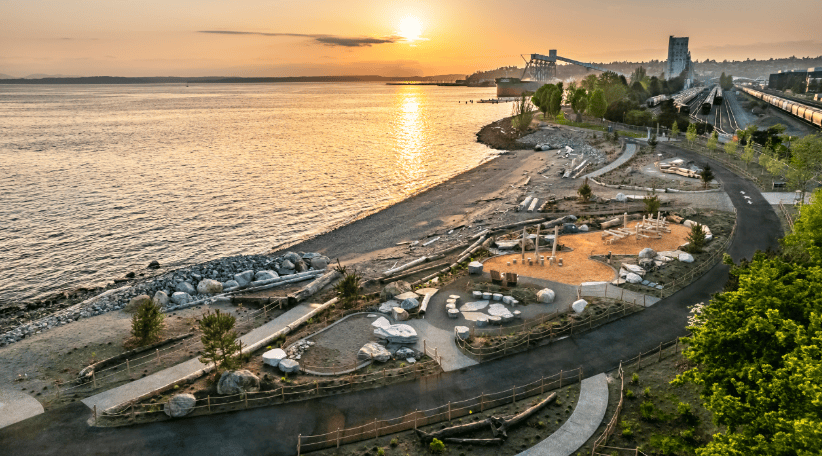
The current park is a big change from its history as tidelands that were filled in the 1960’s after the seawall was built in 1936. First identified in 1956 as a great place for a park, it wasn’t until it was condemned in 1968 by the City and purchased with funds from the Forward Thrust initiative that it became the foundation of what it is today. The park was eventually named after Myrtle Edwards (1895 – 1969), former City Councilmember and President who advocated strongly for parks and the environment.
It is fitting then that the renewed park is a renewed ecosystem as well. In addition to the improved biking and pedestrian paths, seating areas, interpretive signs, nature play area, and 13 moons indigenous displays, Myrtle Edwards Park now has restored beaches, native plantings, and pollinator habitat.
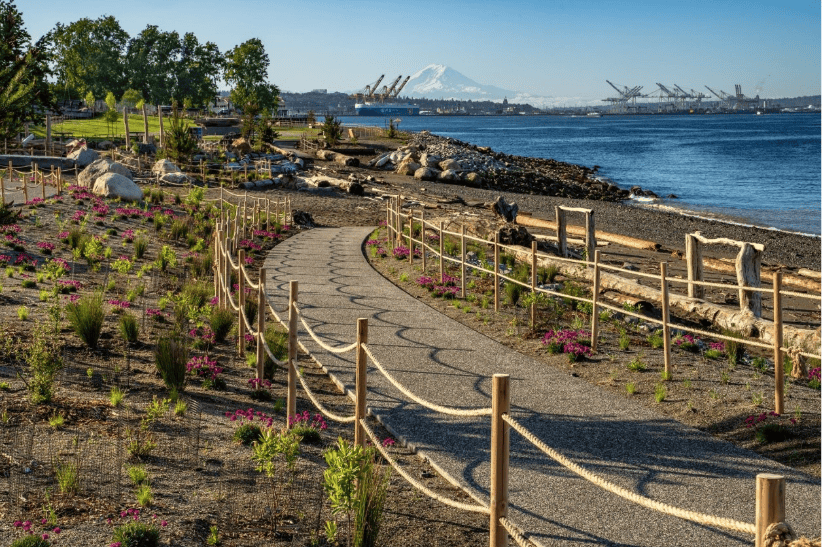
In all, where grass and invasive plants dominated before, more than 74,000 native plants and trees were planted in the Elliott Bay Connections project (which includes Centennial Park). These plants provide the food, forage, and shelter needed for birds, insects, and other species that live in Seattle and pass through on their migrations. This native ecosystem is extremely rare along Seattle’s marine coastline and is a critical element of healthy habitat.
So, while this is an ecosystem transformation more than a restoration of what was there, the improvements to Myrtle Edwards Park fill a void in an important ecosystem and fulfill on the passions and goals of its namesake over 50 years after her death. The young plants added this spring will grow and mature over the years, changing as this park has, creating an environment that connects not just humans to the coast, but the many species that also call Seattle home.
Legal Disclaimer:
EIN Presswire provides this news content "as is" without warranty of any kind. We do not accept any responsibility or liability for the accuracy, content, images, videos, licenses, completeness, legality, or reliability of the information contained in this article. If you have any complaints or copyright issues related to this article, kindly contact the author above.
